Successful Incident Management Starts with People
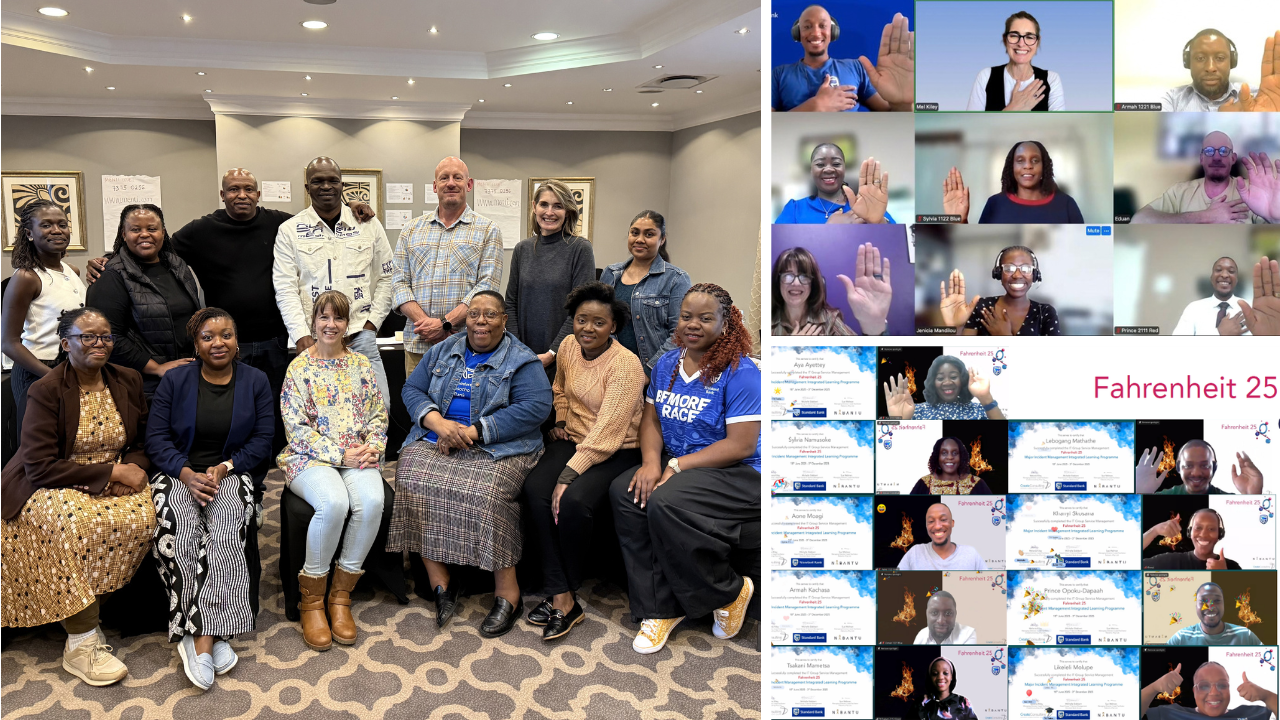
Fahrenheit Major Incident Management Programme: A hybrid learning journey combining in-person and online workshops, presented over five cohorts.
Major incidents test far more than systems. They test how leaders think, communicate and bring people together when the pressure is highest. At The Standard Bank Group, one of Africa’s largest and most respected financial institutions, this understanding has shaped the Major Incident Management Integrated Learning Programme, known as Fahrenheit, built on the principle that resilient service recovery begins with best thinking.
For the third consecutive year, it has been a privilege to partner with Michelle Slabbert, Head: IT Service Management in South Africa, in supporting the Major Incident Managers and Business Service Leads across Africa.
The Challenge
Major incidents are high-stakes and high-pressure. Systems are down, stakeholders are anxious, and the clock is unforgiving. The instinct is often to focus on the process. Michelle recognised something equally important: that under pressure, the quality of an outcome depends on the quality of the thinking, facilitating and communication behind it.
Approaches to major incident execution varied, highlighting a need to strengthen the capabilities behind the process and create a more consistent approach.
The Approach
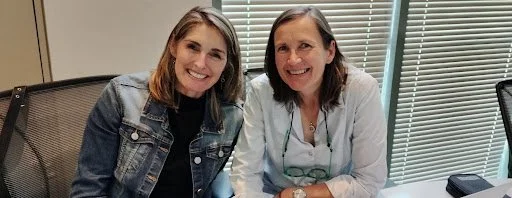
Melanie Kiley of CreateConsulting and Sue Welman of Nabantu Partners
To address this, Michelle partnered with CreateConsulting's Melanie Kiley and Sue Welman of Nabantu Partners to design a tailored learning journey that focused on improving the quality and consistency of major-incident management.
The journey focused on strengthening four key areas:
Technical skills
Behavioural skills
Communication skills
Facilitation skills.
An integral part of the journey is CreateConsulting's Art of Facilitation Programme, designed and led by Melanie Kiley.
Facilitation is often associated with workshops. We see it differently: as a core leadership capability. Leaders who facilitate with impact, create the conditions for people to think clearly together, surface diverse perspectives, navigate difficult conversations, and make better decisions, especially when the pressure is on.
Combined with Whole Brain® Thinking and the Herrmann Brain Dominance Instrument (HBDI®), participants developed a deeper understanding of how different people think, communicate, solve problems and make decisions. They learned how to adapt their own approach, draw out the best thinking in others and lead conversations that created clarity rather than confusion. The journey also builds personal branding and presence, giving delegates practical toolboxes to engage every kind of thinker in the room and to hold their ground with stakeholders.
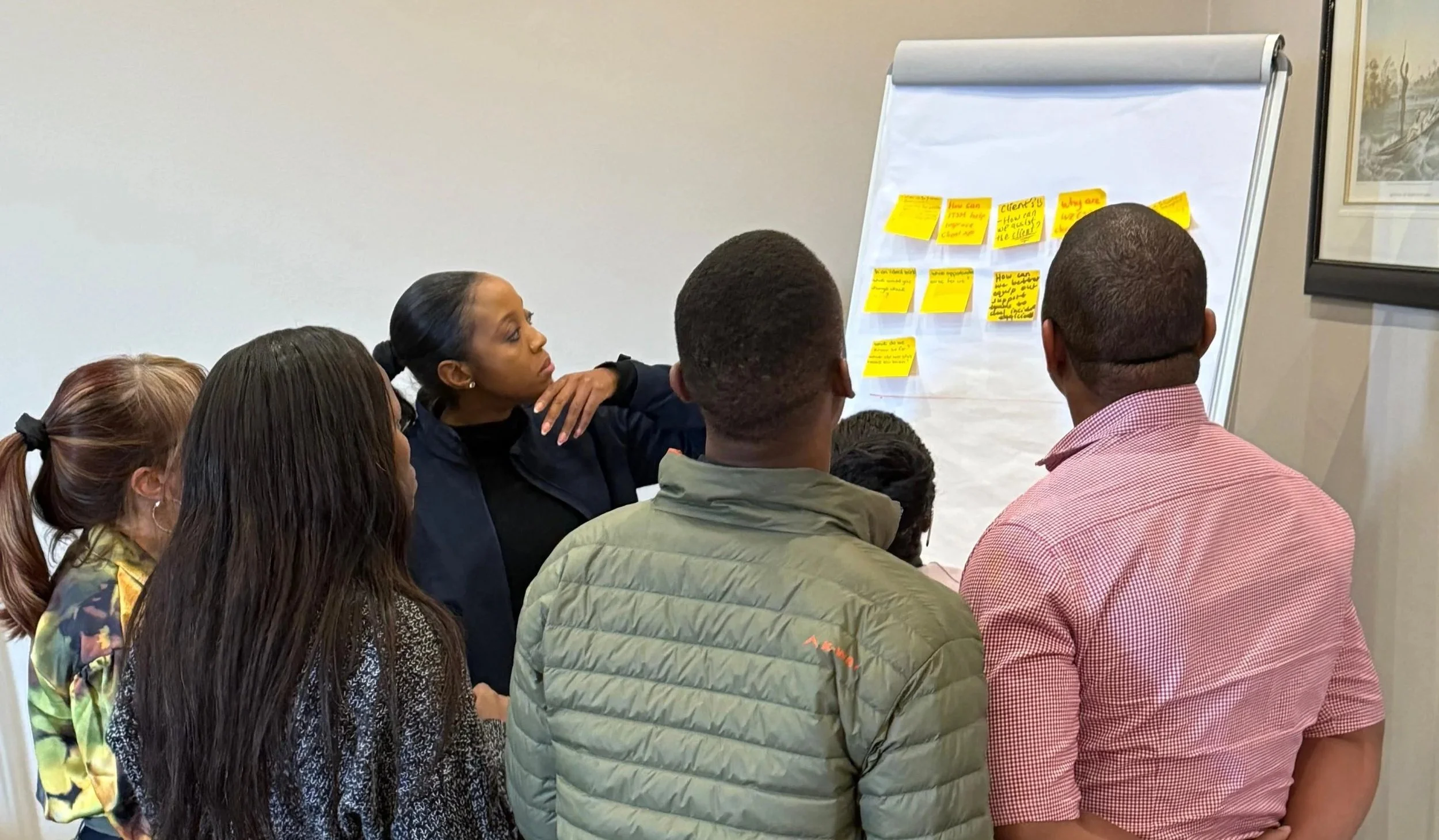
Participants at work during a Cohort 3 session
Reflecting on the experience, Michelle shared:
"This course was phenomenal, very practical and applicable. The integration of theory and practice, coupled with constructive feedback, was invaluable."
The Impact
What began as a focused intervention has grown into a programme spanning the continent. To date, Fahrenheit has developed 43 leaders across five cohorts, reaching delegates in nine African countries: South Africa, Botswana, Lesotho, Eswatini, Zambia, Malawi, Uganda, Nigeria, and Ghana.
The programme has consistently received exceptional feedback from participants.
Programme highlights
The impact has been positive across all cohorts, with delegates rating the overall Fahrenheit Programme experience as excellent (94.5%). Module satisfaction and relevance reached 91% for the Art of Facilitation and 98% for Whole Brain® Thinking.
What participants say
“The facilitation team was exceptional, highly accommodating, engaging, and supportive throughout the programme. The course was brilliantly designed, with a strong balance between theory and practical application. What stood out most was how present and invested the facilitators were in the participants’ learning journey.”
Beyond the numbers, the lasting impact is reflected in the experiences participants have carried back into their work. One participant shared:
"The programme helped me understand how different people think, communicate, make decisions and approach problems. I realised that successful incident management is not just about following processes. It is about managing people, building relationships, influencing stakeholders and communicating effectively during challenging situations."
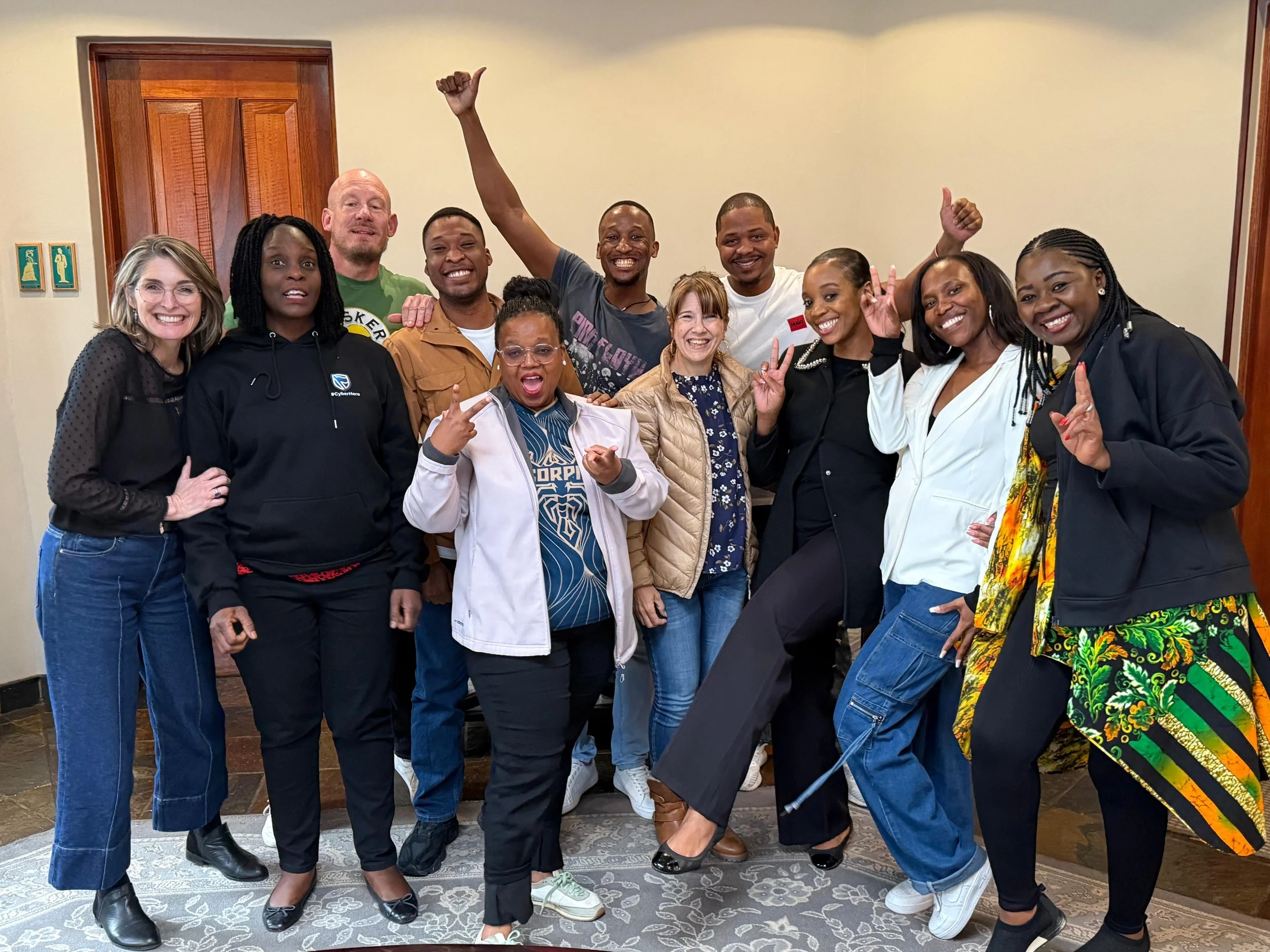
The relationships built through the programme outlast the training room
Why it matters
As organisations navigate increasing complexity, leadership is becoming less about having all the answers and more about creating the conditions for better thinking.
Whether facilitating a strategy session, navigating organisational change or managing a major incident, the ability to ask better questions, leverage cognitive diversity and build alignment often determines the quality of the outcome.
That is why we believe facilitation is one of the most valuable leadership capabilities an organisation can develop.
Our sincere thanks to Michelle Slabbert, the Standard Bank Group IT Service Management team and every delegate who participated across all five cohorts. Your commitment to strengthening leadership under pressure continues to make a meaningful difference across the organisation and continent. Here is to another year of collaboration, connection and the continued spirit of Ubuntu across Africa.
Interested in developing facilitation capability within your organisation? Connect with us to start the conversation.